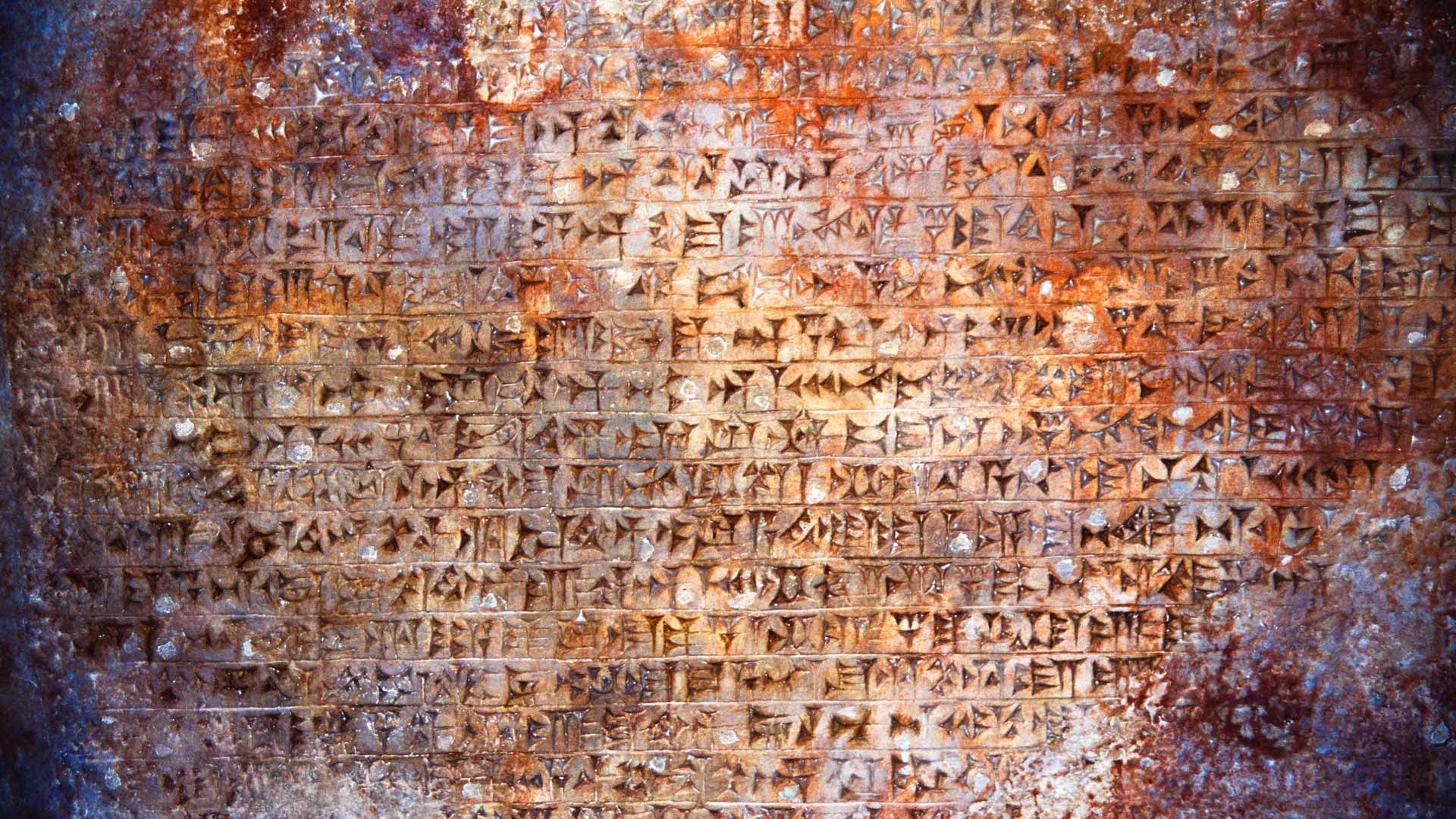
Cuneiform, a script characterized by wedge-shaped symbols, was used in transcribing numerous languages of the Ancient Near East, which region roughly corresponds to today"s Middle East area. Its usage spanned from the early Bronze Age to the dawn of the 1st century CE. The publication of Achaemenid royal inscriptions at Persepolis—modern-day Iran—shed light again on cuneiform in the early 17th century. These inscriptions presented a mosaic of languages, a linguistic puzzle that would ultimately yield to the determined efforts of scholars in the 19th century. Unraveling the secrets of cuneiform opened a window into the past, allowing us to grasp the profound significance of this ancient script in shaping human history.
Persepolis, Iran
Today in History
More Desktop Wallpapers:
-
A church atop a hill
-
Gollinger Waterfalls, Salzburg, Austria
-
Porthcawl lighthouse, Wales, United Kingdom
-
Gespensterwald, Nienhagen, Germany
-
A feel of an era bygone
-
Piecing together a better tomorrow
-
Dunluce Castle, County Antrim, Northern Ireland
-
Splügen Pass, Switzerland
-
Gayathri Reservoir, Karnataka, India
-
A sea of humanity
-
Town of Pienza in Tuscany, Italy
-
Black-and-white bovines
-
Italica, an old Roman city in Santiponce, Andalusia, Spain
-
Season of light in the City of Light
-
Asian swallowtail butterfly on a red spider lily
-
An iridescent view
-
Vasco da Gama Bridge, Lisbon, Portugal
-
Misty mountain hop
-
Lavender field, Hertfordshire, England
-
Astoria-Megler Bridge, Oregon
-
Bodie State Historic Park, California, United States
-
Singing the blues
-
A dramatic celebration of peace
-
Lion, Queen Elizabeth National Park, Uganda
-
Kedarkantha, Uttarkashi, Uttarakhand
-
Pacific sea nettles off the coast of Carmel, California, USA
-
Dunes at White Sands National Park, New Mexico, United States
-
A flashy, frigid waterfowl
-
Flock of Swaledale sheep in North Yorkshire, England
-
Fiji Day
Bing Wallpaper Gallery