 Bing Wallpaper Gallery
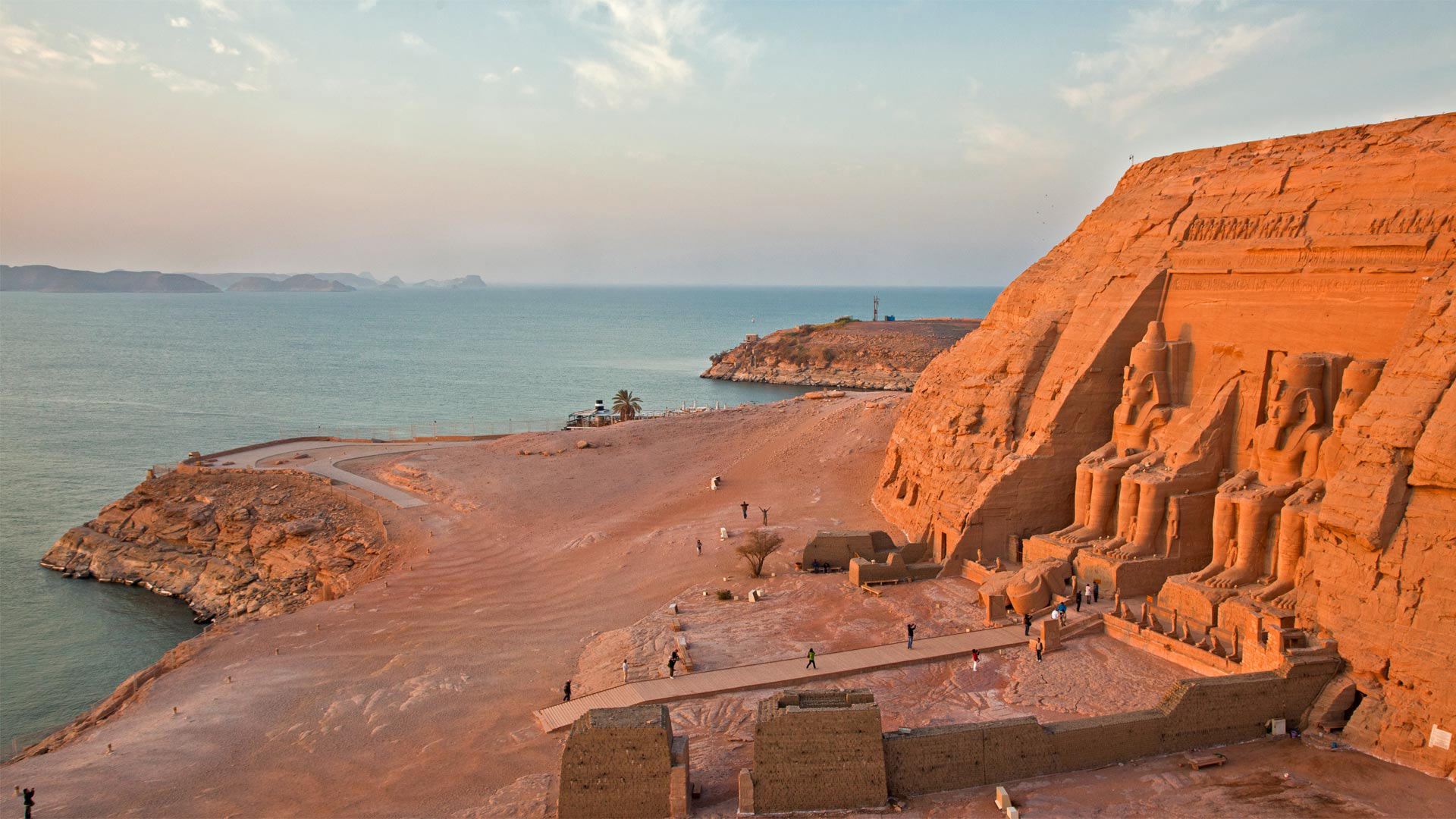

These massive temples—known today as Abu Simbel—were built in the 13th century BCE by the pharaoh Ramesses II. He left a legacy of monuments and temples across Egypt, many of which, like Abu Simbel, featured Ramesses II himself as the star attraction. But over the centuries, these temples were almost completely buried in sand and forgotten. It was not until the early 1800s when an explorer saw the heads of the colossal statues poking through the sand that the temples were again discovered. Then in the 20th century, construction of a dam on the Nile River formed Lake Nasser, a massive reservoir that would have flooded the site where the temples stood. To save them from inundation, the temples were disassembled and relocated to a nearby hill. The process took almost five years and required that workers cut the temples into pieces and reassemble them exactly as they were built 3,000 years ago. We think Ramesses II would approve.
© George Steinmetz/Getty Images
 Share
Share