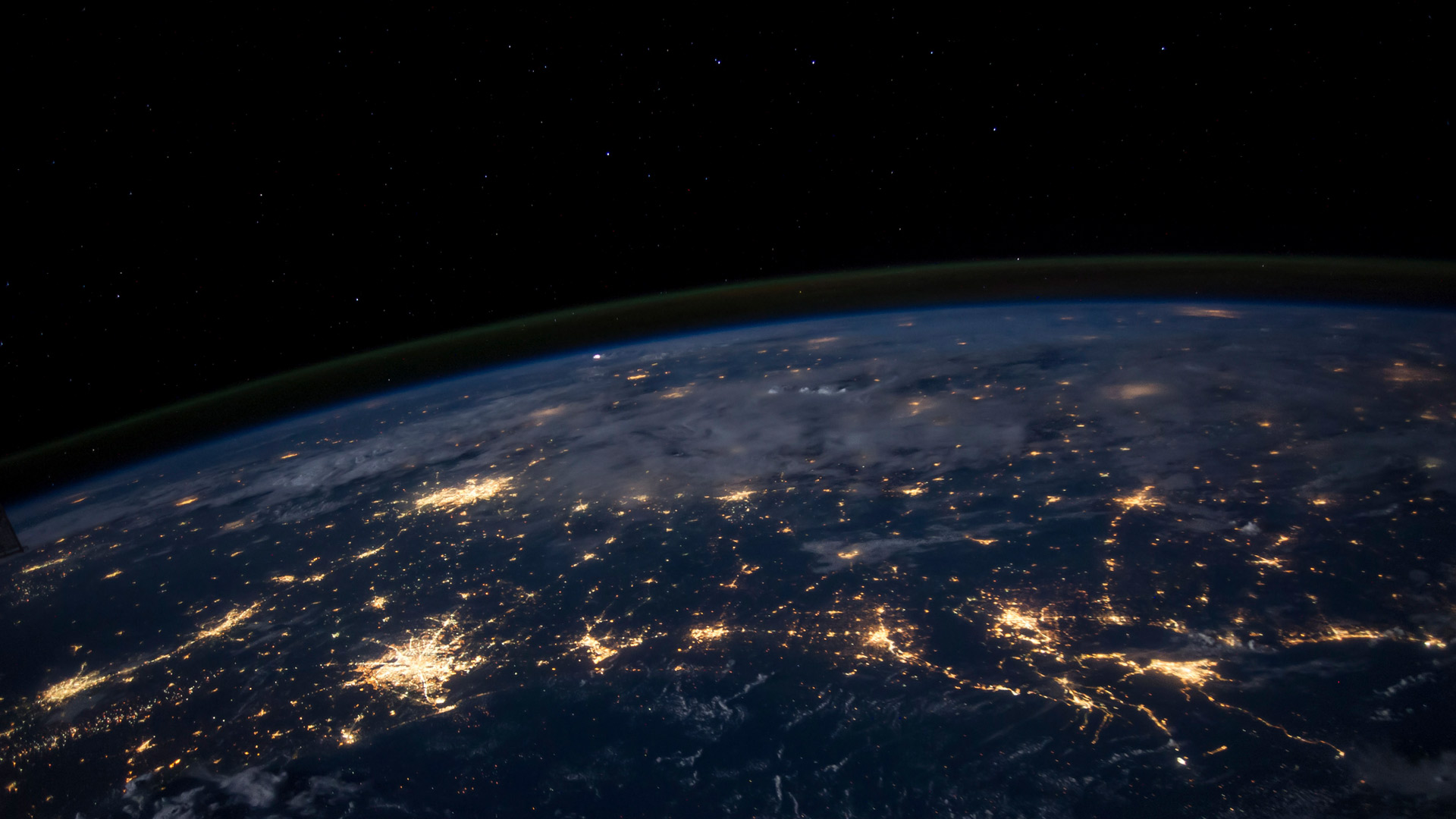
What do invisible gases, vintage hairspray, and satellites have in common? They all played a role in one of the greatest environmental comebacks in history. Seen from 225 miles above, the Gulf Coast glows like a constellation—clusters of light scattered across the dark. But what truly makes this view possible can"t be seen: the ozone layer, silently shielding everything below from the sun"s ultraviolet rays. By the 1980s, that shield was thinning fast—damaged by chemicals once used in refrigeration and aerosol products. The solution? A global pact. The Montreal Protocol, signed in 1987, led to a swift phase-out of ozone-depleting substances. Today, satellites show that the hole over Antarctica is shrinking. Scientists believe it could be fully healed by mid-century.
Nighttime view over the Gulf Coast
Today in History
More Desktop Wallpapers:
-
The Sonoran Desert, Arizona
-
Belted Galloway cows
-
World Meteorological Day
-
Independence Day of the Bahamas
-
Fallen but not forgotten
-
Manatee Awareness Month
-
Red skies at Ruby Beach
-
Where the bearded reedling sings
-
International Museum Day
-
harlem
-
Looking back on 150 years of rail travel
-
Meet our fuzzy Earth Day mascot
-
It’s Weihnachtsmarkt time!
-
In memory of those lost
-
First day of summer
-
Nubble Island’s only industry
-
Manatee Awareness Month
-
Celebrating Minnesota’s statehood
-
Prague, Czech Republic
-
A courtyard scene from Spain
-
They’re grrrape!
-
Bobbing for crab apples
-
A winter light show
-
Lake Misurina, Dolomites, Italy
-
Rainbow Mountain
-
Spire Cove in Kenai Fjords National Park, Seward, Alaska
-
Collared aracari in Costa Rica
-
Abbey Gardens in Bury St Edmunds, England
-
Cherry blossoms at the National Mall, Washington, DC
-
A. M. Foster Bridge in Cabot, Vermont
Bing Wallpaper Gallery